


Classic Lotus Car Paint
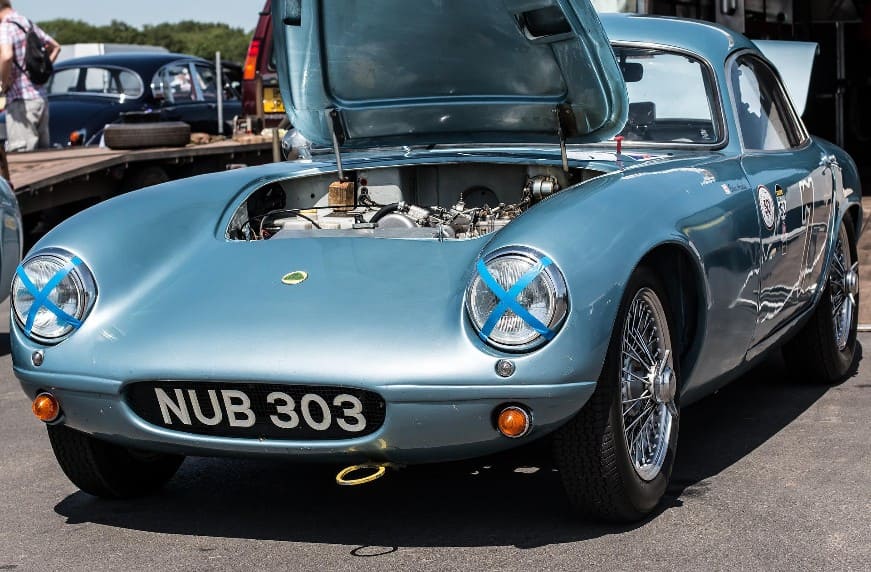
Our 20+ years of experience ensure that every touch-up, whether on a 1970s Esprit or a 1980s Europa, is executed with heritage accuracy. PaintNuts classic car paint tool lets you easily input your Lotus model, year and paint code to receive a custom mixed classic car paint match.
Choose from premium application types, including touch-up pens, tins, and aerosols, for a professional finish that preserves the original look of your classic Lotus.
Select the right classic car paint product
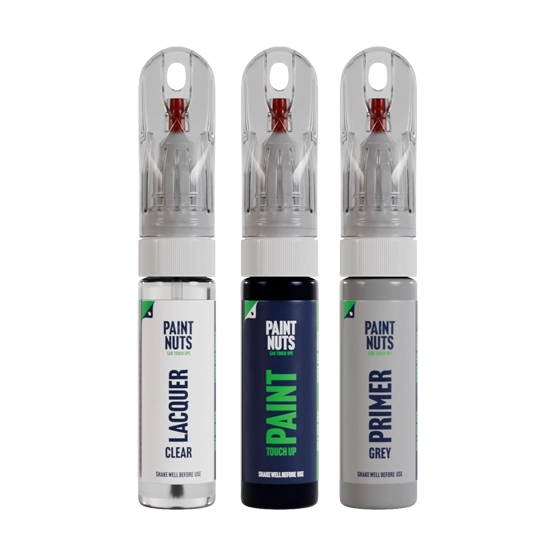
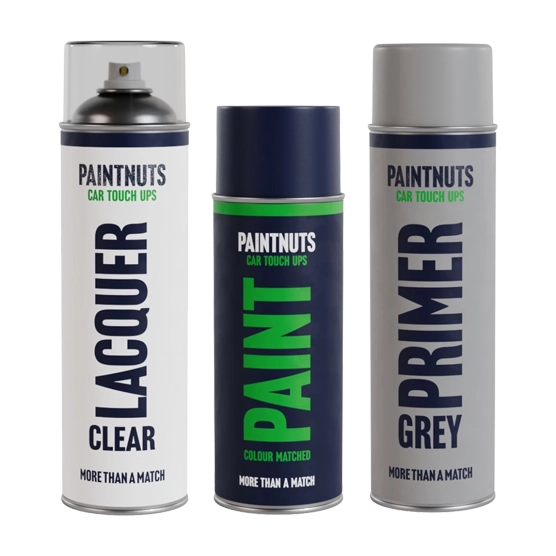
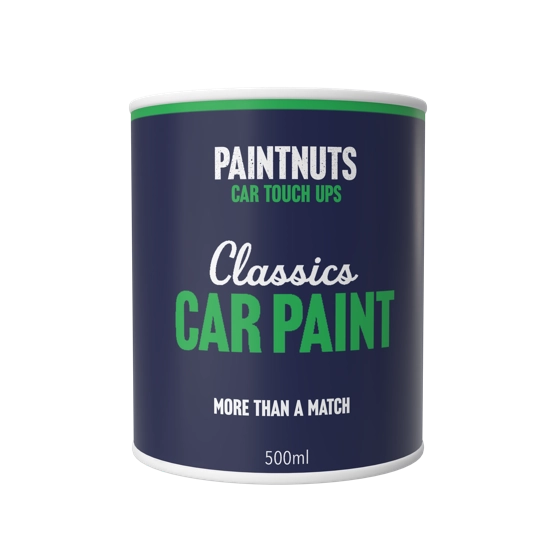
Choose your perfect classic touch up paint from our comprehensive collection of Colour-Matched car paint. Available in precise 20ml touch-up pens for detailed work, 400ml aerosols for larger areas, or tin options for spray applications. Each colour-matched classic car paint comes as a single core unit, in a handy bundle with primer and lacquer, or as an all-you-need package for premium finishes on your classic car.
For industrial or commercial quantities beyond 500ml, contact our colour specialists for custom solutions.
What Makes PaintNuts Classic Car Paint Different
Three things make classic car paint harder to get right:
- Registration lookups don't work. Most classics aren't in DVLA databases, so you need the physical paint code from the car
- Classic formulas are different. A 1965 Jaguar or 1972 Mini colour isn't just a shade match. The original formula has different pigments, metallic content, and chemistry from modern paint
- Many classic colours are discontinued and don't appear in standard databases at all
PaintNuts maintains a library of over 80,000 formulas including an extensive range of classic and discontinued colours, mixed to order using precision mixing technology. Every order is backed by our colour match guarantee: if the paint doesn't match because of our mixing, we'll replace it free of charge.
Find your classic car paint using our lookup tool, or contact us if your colour needs manual research.
What is Cellulose Paint? And Do You Need It for Your Classic?
Cellulose paint was the dominant automotive finish from the 1920s through to the 1960s. It uses nitrocellulose as its binder, dries quickly through solvent evaporation, produces a soft finish that polishes beautifully, and was standard on most British cars built before 1970.
From the late 1960s, manufacturers moved to synthetic enamel and then two-stage basecoat/clearcoat systems. By the 1980s, cellulose was effectively obsolete for new car production.
Do you need cellulose to repair your classic?
For touch-up repairs on chips, scratches, and small scuffs, the answer is no. Modern synthetic paint can be applied over original cellulose finishes for spot repairs without compatibility problems. The repair area is small enough that the interface between old and new paint isn't an issue.
For a full panel respray over original cellulose, it's more complex. Applying modern paint directly over old cellulose without preparation can cause adhesion problems over time. If you're planning full panel work, speak to our team before ordering.
Cellulose is still available in the UK but it's increasingly hard to source, requires specialist handling and professional ventilation to apply safely, and is not practical for DIY use.
PaintNuts mixes colour-matched paint in a modern synthetic formulation that works for touch-up repairs on any classic car regardless of the original finish. Browse our classic car paint range or contact us.
How to Read a Classic Car Paint Code
A paint code is a short reference that identifies the exact colour your car was painted at the factory. Unlike modern cars, you can't look it up by registration. You need to find it on the car itself and understand what format the manufacturer used.
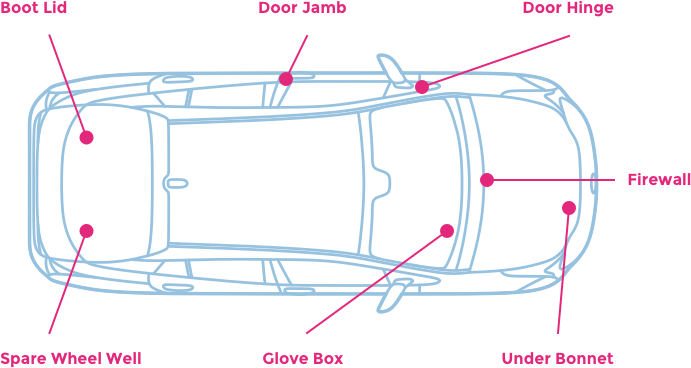
Where to find it
- Bulkhead (most common on British cars)
- Driver's door jamb - very common from the 1970s onward
- Right-hand inner wing in the engine bay - common on BMC and BL cars
- Spare wheel well - common on German cars especially VW and BMW
- Inside the boot lid - common on Jaguar and some other British premium cars
What a classic car paint code looks like by manufacturer
|
Manufacturer |
Code format |
Example |
|
BMC / BL (Austin, MG, Triumph, Rover) |
2 or 3-digit number |
19 = Tartan Red, 25 = Conifer Green |
|
Rootes (Hillman, Sunbeam) |
2 or 3-digit number |
Similar format to BL group |
|
Jaguar |
2 or 3-letter code |
EGC = Old English White, JHM = BRG |
|
VW (pre-1974) |
L-prefix + 2 digits |
L31 = Black, L87 = Pearl White |
|
VW (1974 onward) |
2-letter code |
LY9B = Deep Black |
|
BMW |
3-digit number |
146 = Polaris Silver, 147 = Henna Red Metallic |
|
Porsche |
2 or 3-digit number |
80K = Guards Red, 908 = Glacier White |
|
Citroen |
2-letter code |
AC = Blanc Meije, AM = Bleu Ardoise |
What to do if the classic paint code is missing
- Contact the marque owners club or heritage register. Many hold build records that can confirm the original colour from the car number
- Check for surviving original paint in sheltered areas: inside door shuts, under the bonnet, behind rubber seals
- Check original documentation. The V5C or logbook may reference the colour name
- If you have the colour name but not the code, contact our support team via the FAQ page. For many classic colours, the name alone is enough to identify the correct formula.
Classic Car Paint Repair vs Respray: Which Do You Need?
Touch-up paint is right for:
- Stone chips
- Light scratches
- Small scuffs and individual marks on otherwise sound surrounding paint
For all of these, a colour-matched touch-up pen or tin gives a practical repair at a fraction of bodyshop cost. Applied correctly with a lacquer coat on metallic finishes, it protects the car from further damage and improves appearance significantly.
The cost difference
|
Repair type |
Classic car bodyshop |
PaintNuts DIY |
|
Stone chip or small scratch |
£60 to £200 |
From £13.99 (pen) |
|
Single panel respray |
£400 to £800+ |
£40 to £50 (aerosol kit) |
|
Full car respray (specialist) |
£3,000 to £10,000+ |
Not practical as DIY to this standard |
Touch-up paint won't be invisible at close range if you are looking for it. What it does well is protect the car, maintain appearance at normal viewing distances, and do it for a fraction of professional rates. For most classic car owners, touch-up handles everything except the most extensive paint failure.
Browse the PaintNuts classic car paint range to find the right product. Use the damage assessment tool if you are not sure which format suits your repair.
Classic Lotus Paint Code Location
Your Lotus paint code is crucial for achieving an accurate colour match on your classic Lotus. Check these common locations for your vehicle’s paint code:
- On the door jamb or frame
- Under the bonnet
Using the correct code ensures that your custom mix replicates the original factory finish. Simply enter your details into our classic car tool and we will colour match your classic paint.
Why do I need my classic Lotus paint code?
Your classic Lotus paint code is essential for achieving an authentic colour match. The exact code guarantees your vehicle’s original finish is replicated with precision. This technical requirement preserves the heritage character of your car.
Most popular Lotus paints by year and model
Each of these models represents a milestone in Lotus’ rich history, and our catalogue spans these eras with precision-matched formulations designed to honor the classic appeal of every vehicle.
-
1972 Lotus Elan
-
1978 Lotus Europa
-
1982 Lotus Esprit
-
1986 Lotus Elite
-
1990 Lotus Exige
Iconic Colours of Classic Lotus
-
Lotus Yellow - Used extensively on the Elan for its vibrant and energetic appeal.
-
Carnival Red - A subtle yet striking tone that complements the car’s sleek design.
Timeless Europa Finishes
-
Racing Green - Emblematic of sporting heritage, found on select Europa models.
-
Cirrus White - A chic option that enhances the curves of the car.
Bold Esprit Statements
-
Calypso Red - Offering a standout finish on many Esprit variants.
-
Lagoon Blue - A refined colour that exudes elegance and performance.
Each hue has historical significance, reflecting Lotus’ commitment to sportsmanship and innovative design. These colours not only celebrate the brand’s heritage but also provide a reliable restoration solution for classic enthusiasts.
How do I use a Lotus touch-up paint pen?


How to use Lotus touch-up paint? (FAQ)
How do I apply touch-up paint to my classic Lotus?
Begin by cleaning and lightly sanding the damaged area. Shake the product well. Apply the touch-up paint in thin, even layers using the provided applicator, allowing each coat to dry before adding the next. This process ensures a seamless blend with your vehicle’s finish.
How do I prep my classic Lotus for paint application?
Preparation is key. Wash the area thoroughly, remove any rust or debris, and lightly sand around the scratch. Use a primer if needed, then clean off the dust. This careful prep work ensures that the touch-up paint adheres properly and results in a flawless finish.
What is the best paint for my classic Lotus?
The best paint system combines precision-matched paint with a primer and clear lacquer. PaintNuts offers a comprehensive solution with modern, UV-resistant formulations and British Standard quality that outperforms traditional cellulose paints. This system provides lasting protection and a factory-finish appearance.
What type of applicator should I use?
For classic Lotus touch-ups, we recommend using high precision applicators such as our touch-up paint pens which feature a needle point for detailed work. For larger areas, a fine brush or spray aerosol may be more appropriate to achieve even coverage.
How long will the paint last on my classic Lotus?
Our custom-mixed paint is formulated for lasting durability and UV resistance. When properly applied to a clean, prepped surface, you can expect a long-lasting finish that maintains its colour and luster, protecting your classic Lotus from everyday wear and environmental elements.
Why PaintNuts paints?
PaintNuts automotive touch up products provide excellent results without the bother and cost of sending your car to the body shop.
- Much cheaper than booking into your local bodyshop
- Improved appearance
- Easy D.I.Y. application
- Anti-Corrosive protection
The colour matched paint is extremely easy to apply making the touch up pen a perfect DIY solution to fix scratches, chips and scuffs improving the visual appearance of your vehicle.
Paint Fit for All Classic Car Brands
Browse our complete archive of authentic paint colours for legendary marques.
Select your manufacturer below to find the colour match for your classic vehicle's year and model.