





Professional quality classic car touch up paint at your fingertips
Premium vehicle paint specially formulated for vintage and classic vehicles.
Our heritage colour matching system ensures factory-perfect results that blend seamlessly with original paintwork.
Paint Fit for All Classic Car Brands
Browse our complete archive of authentic paint colours for legendary marques.
Select your manufacturer below to find the colour match for your classic vehicle's year and model.

















Precision Mixed, Every Time
Three simple steps for a perfect result
-
Enter vehicle details
Provide your vehicle's make, model, year, and paint colour name or paint code. This information allows us to locate the precise paint formulation required to create an exact match.
-
Place your order
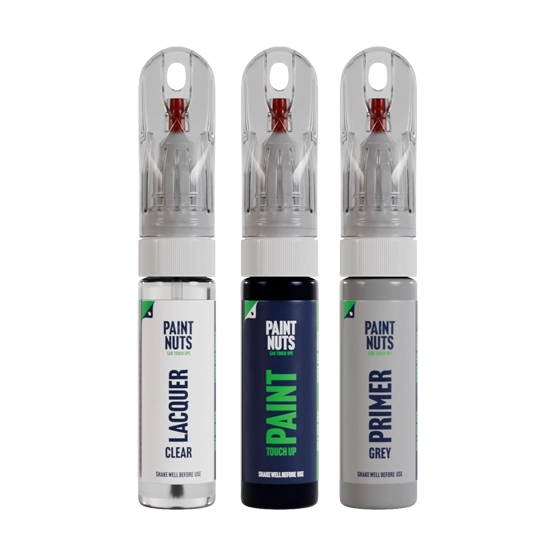
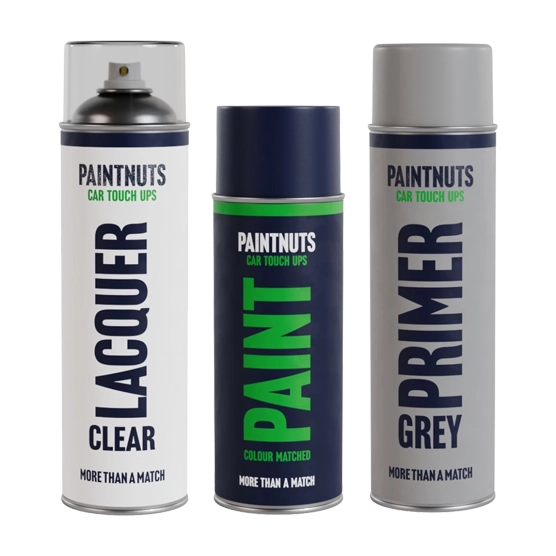
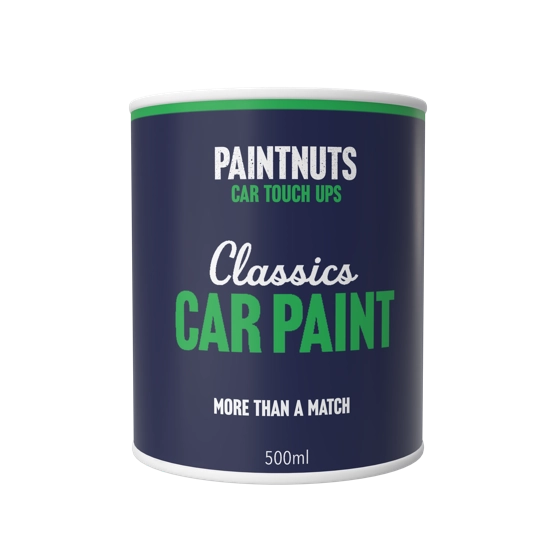
Select which product you require - colour matched touch up pens, aerosols and tins of paint are all available. Complete your secure purchase. We'll custom-mix your paint to match the information provided.
-
Quality control and dispatch
Every order undergoes rigorous testing by our colour specialists to ensure accuracy before dispatch. Your paint comes with our Colour Match Guarantee. Fast track delivery options are available during checkout.
Why PaintNuts?
PaintNuts automotive paint products provide excellent results without the bother and cost of sending your car to the bodyshop.


PaintNuts provide everything you need for professional-quality results.
Quality Classic Car Paint Repairs
Discover how the right paint match can bring your classic back to showroom condition.
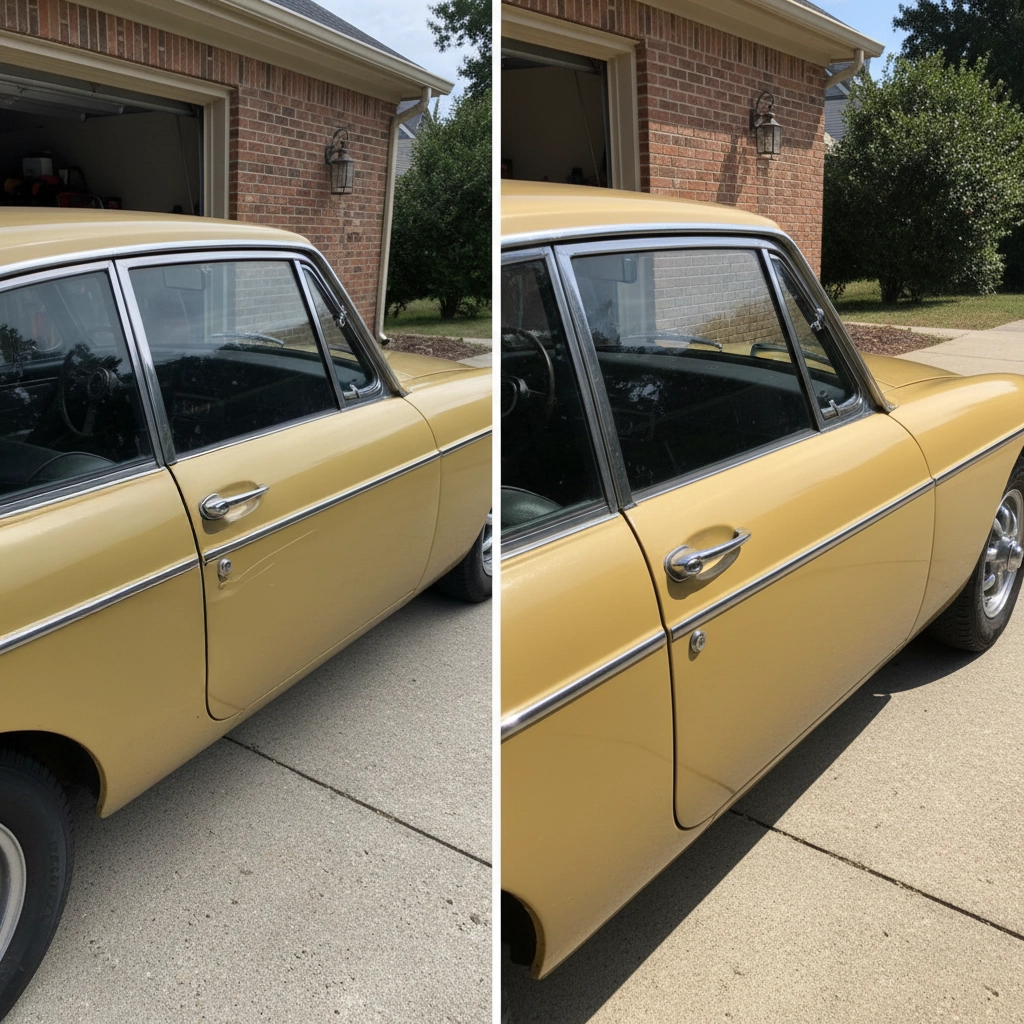
1972 MG MGB GT
Pen touch up using Harvest Gold 'All You Need' Pen Bundle, which includes panel wipe, Scratch & Scuff Remover, primer, lacquer and accessories.
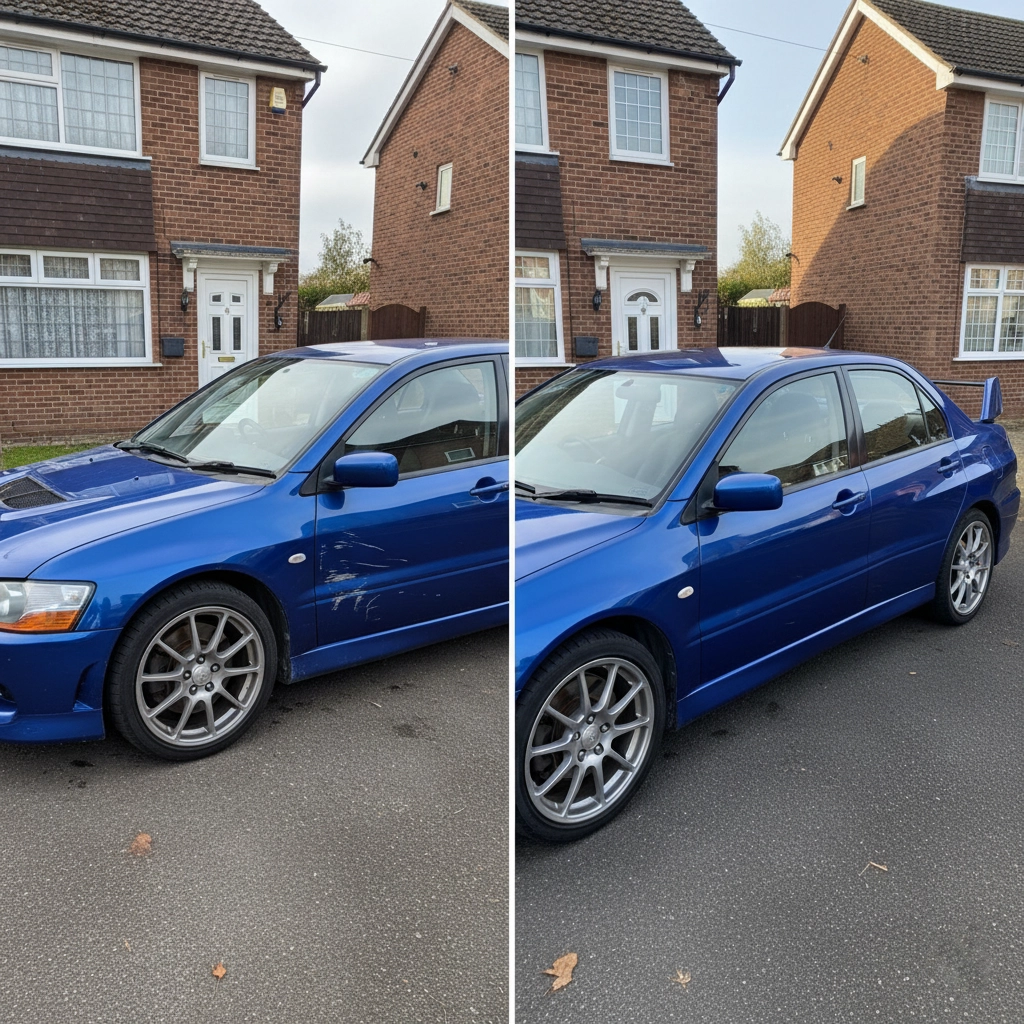
2010 Mitsubishi EVO 8
Complete door respray using Subaru Laser Blue Aerosol, Primer and Lacquer. Took our customer around 8 hours, very happy with the results.
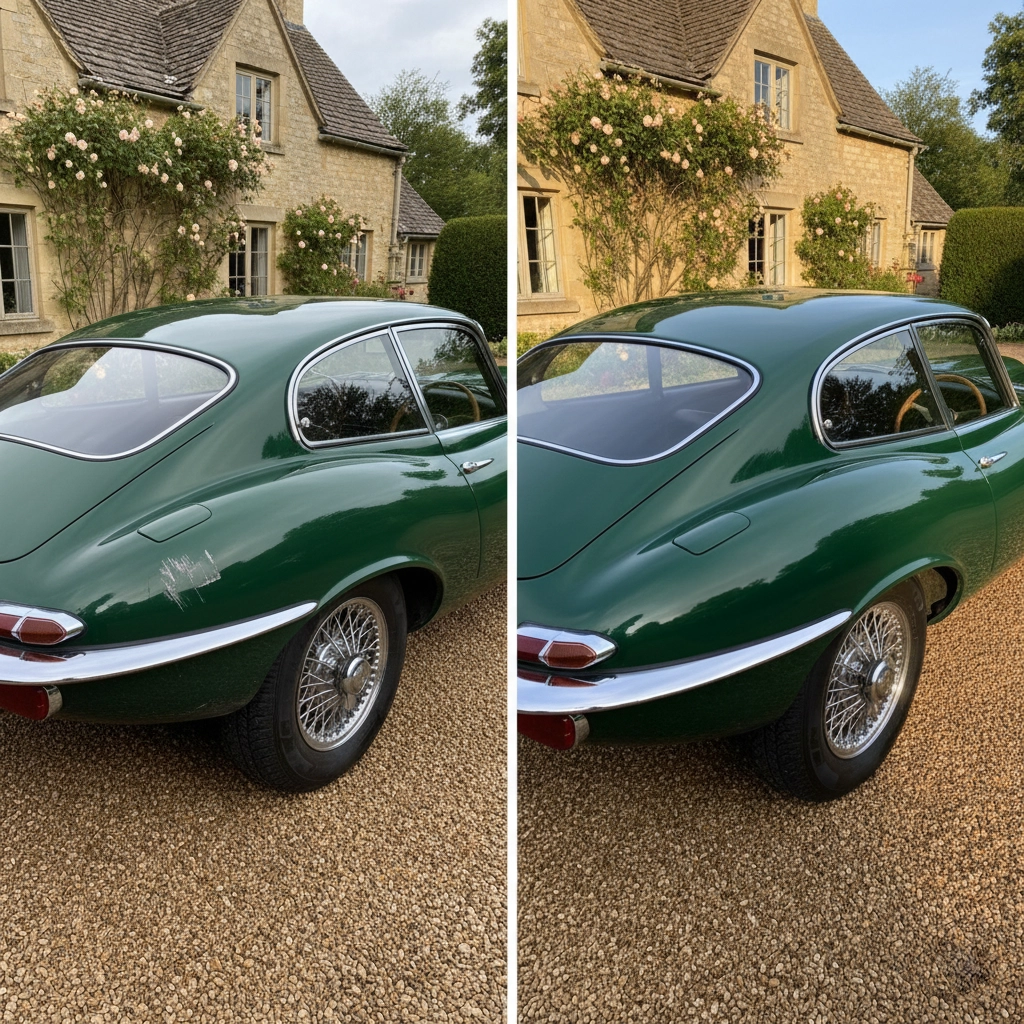
1967 Jaguar E-Type Series 1
Rear wing damage repaired using the 'All You Need' Aerosol Bundle in British Racing Green. Comes with everything you need for a professional looking repair.
What is Cellulose Paint? And Do You Need It for Your Classic?
Cellulose paint was the dominant automotive finish from the 1920s through to the 1960s. It uses nitrocellulose as its binder, dries quickly through solvent evaporation, produces a soft finish that polishes beautifully, and was standard on most British cars built before 1970.
From the late 1960s, manufacturers moved to synthetic enamel and then two-stage basecoat/clearcoat systems. By the 1980s, cellulose was effectively obsolete for new car production.
Do you need cellulose to repair your classic?
For touch-up repairs on chips, scratches, and small scuffs, the answer is no. Modern synthetic paint can be applied over original cellulose finishes for spot repairs without compatibility problems. The repair area is small enough that the interface between old and new paint isn't an issue.
For a full panel respray over original cellulose, it's more complex. Applying modern paint directly over old cellulose without preparation can cause adhesion problems over time. If you're planning full panel work, speak to our team before ordering.
Cellulose is still available in the UK but it's increasingly hard to source, requires specialist handling and professional ventilation to apply safely, and is not practical for DIY use.
PaintNuts mixes colour-matched paint in a modern synthetic formulation that works for touch-up repairs on any classic car regardless of the original finish. Browse our classic car paint range or contact us.
Classic Car Paint Eras: A Quick Reference Guide
Understanding what paint system was used on your classic determines how it has aged. Here is a plain guide by decade.
| Era | Paint system | For touch-up repairs | What to expect |
| 1920s - 1940s | Nitrocellulose | Modern synthetic over the top | Very old, likely resprayed, colour shifted significantly |
| 1950s | Cellulose or early alkyd enamel | Modern synthetic over the top | Solid colours only, expect fading |
| 1960s | Synthetic enamel, single-stage | Colour coat only, no lacquer needed | Two-tone schemes common early in decade |
| Early 1970s | Synthetic enamel, single-stage | Colour coat only for solids | Metallics beginning to appear |
| Late 1970s | Two-stage for metallics | Colour then lacquer for metallics | Check whether metallic before choosing approach |
| 1980s onwards | Two-stage standard for metallics | Colour then lacquer for all metallics | Pearls and micas appear late in decade |
If you are unsure what era your car falls into or which approach your repair needs, our damage assessment tool will help. For any metallic or pearl finish, always apply a lacquer coat after the colour coat.
Proper Classic Car Paint
We provide high-quality classic vehicle paints, expertly mixed for heritage models. Our premium paint range includes everything needed for your classic restoration:
- Authentic Colour Matching – Custom-mixed to match original paint codes.
- Professional-Grade Paints – Designed for restoration projects, ensuring a long-lasting finish.
- Essential Accessories – From primers and abrasives to restoration kits, we offer the tools for a seamless refinishing process.
Bring your classic car back to its former glory with PaintNuts classic car paints.
What makes us different?
-
Unmatched Colour Archive
Our database contains over 250,000 unique paint formulations spanning a century of automotive history. From pre-war classics to 1990s icons, we have the exact formula for your vehicle's original colour.
-
Precision Paint Mixing Technology
We use the latest precision paint dispensing machinery to ensure accurate results.
-
Award-Winning Service
Our customer service team are on hand to help. With over 500,000 happy customers, we're the UK's leading supplier of custom made touch up paints.
-
Professional Quality
We supply UK bodyshops, so we know what's required to reach a professional standard. We've partnered with some of the world's leading automotive paint manufacturers to ensure our paints are fit for your repair or renovation.
Classic Car Paint Repair vs Respray: Which Do You Need?
Touch-up paint is right for:
- Stone chips
- Light scratches
- Small scuffs and individual marks on otherwise sound surrounding paint
For all of these, a colour-matched touch-up pen or tin gives a practical repair at a fraction of bodyshop cost. Applied correctly with a lacquer coat on metallic finishes, it protects the car from further damage and improves appearance significantly.
The cost difference
| Repair type | Classic car bodyshop | PaintNuts DIY |
| Stone chip or small scratch | £60 to £200 | From £13.99 (pen) |
| Single panel respray | £400 to £800+ | £40 to £50 (aerosol kit) |
| Full car respray (specialist) | £3,000 to £10,000+ | Not practical as DIY to this standard |
Touch-up paint won't be invisible at close range if you are looking for it. What it does well is protect the car, maintain appearance at normal viewing distances, and do it for a fraction of professional rates. For most classic car owners, touch-up handles everything except the most extensive paint failure.
Browse the PaintNuts classic car paint range to find the right product. Use the damage assessment tool if you are not sure which format suits your repair.
Classic car paints for authentic restorations
With over 20 years of experience in the automotive industry, PaintNuts is a trusted name as a classic car paint supplier. We offer quality custom-mixed classic car paints to bring your vintage vehicle back to life. Every batch is precision-mixed to order, ensuring authenticity in colour restoration.
Our classic car paint collection covers a wide range of solid, metallic, and pearlescent finishes, providing high-quality alternatives to traditional cellulose paints. While automotive cellulose paint was once a staple for restorations, our modern formulations offer superior durability, easier application, and a factory-accurate finish without the drawbacks of cellulose-based paints.